

The event featured:
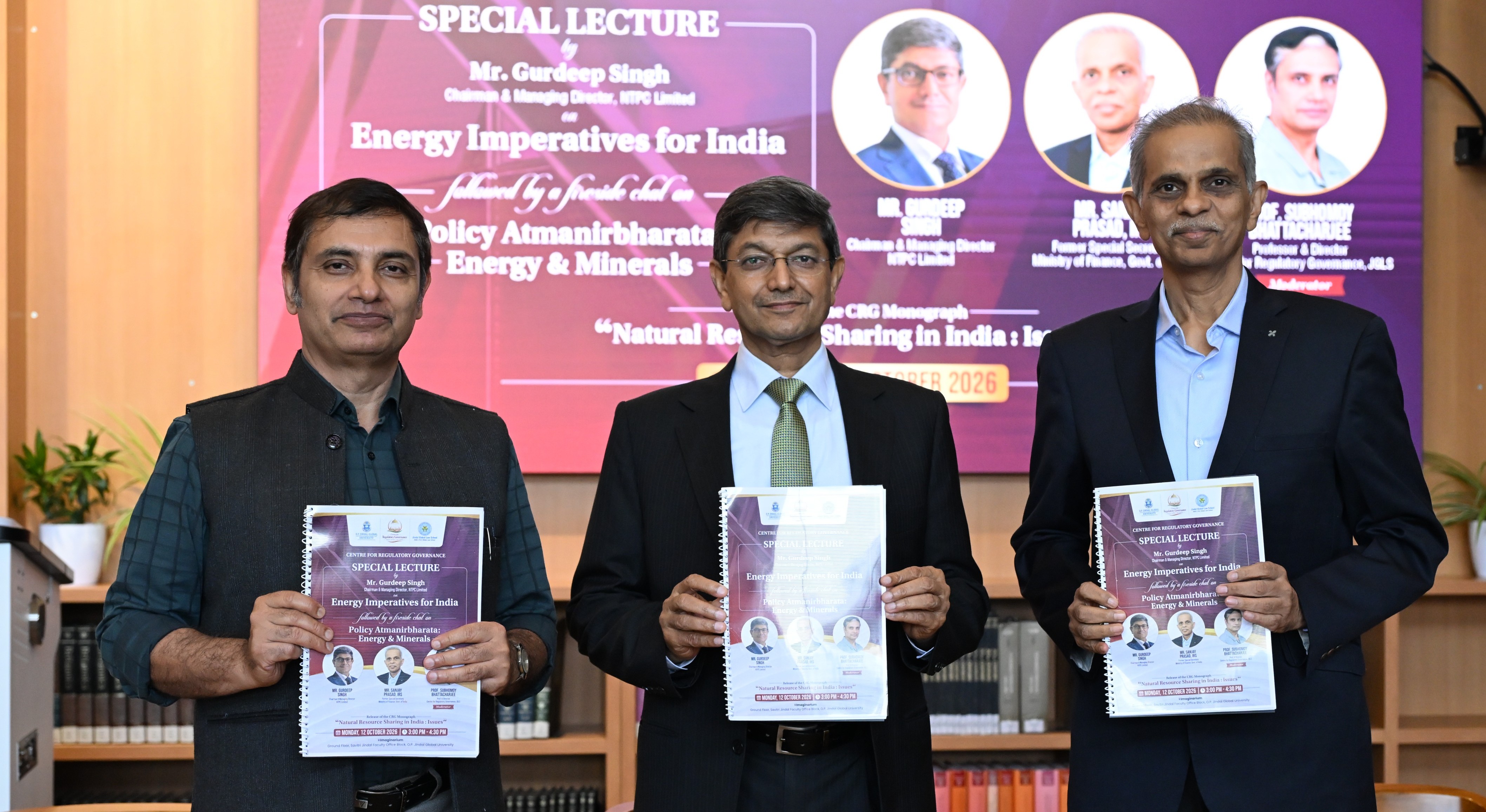
● Special Lecture by Mr Gurdeep Singh
Topic: Energy Imperatives for India
● Release of the CRG Monograph
Topic: Natural Resources Sharing in India: Issues – by Mr Sanjay Prasad
● Fireside chat with Mr Gurdeep Singh and Mr Sanjay Prasad
Topic: Policy Atmanirbharata: Energy and Minerals
In an interactive Fireside Chat with Mr Gurdeep Singh and Mr Sanjay Prasad, moderated by Prof. Subhomoy Bhattacharjee, Director, CRG, the discussions harped on issues related to India's energy sector and natural resource governance. The panel addressed the regulatory control of coal, generation, and distribution by the state, while exploring the surging electricity demand driven by economic growth, industrial expansion, and cooling needs. The challenges related to renewable energy, managing grid stability and the future and role of nuclear power were also discussed. It brought together perspectives from public administration, industry leadership, and academic research.
The main topics discussed during the event related to:
● The demand surge for Energy in Indian context driven by factors like
growth of economy, boom of data centres, AI, and a massive increase in space cooling needs.
● The challenges associated with the rapid growth of solar and renewable capacity.
● The heavy regulation of the Power sector highlighting issues surrounding distribution, political subsidies, regulatory assets, and the distinction between commercial enterprise and public distribution.
● Discussions also related to India's ambitious targets for nuclear energy (aiming for 100 gigawatts by 2047). The debate also focussed on small modular reactors (SMRs) versus proven conventional pressurized heavy water reactors (PHWRs), and green hydrogen/chemical initiatives.
● The release of the CRG monograph on natural resource sharing. The report analyzes the tensions between the Union and the State Governments on the legal, administrative and constitutional fronts, when it comes to sharing of natural resources like minerals. Recent court rulings and new laws have tended to create friction between the Central and the State Governments on financial issues. The author, in this article, attempts to find a balance between the two, so that Central Government has resources for its big projects, while the State Governments too, do not lose out on the monetary aspects for their budgetary needs.
Leave a Reply