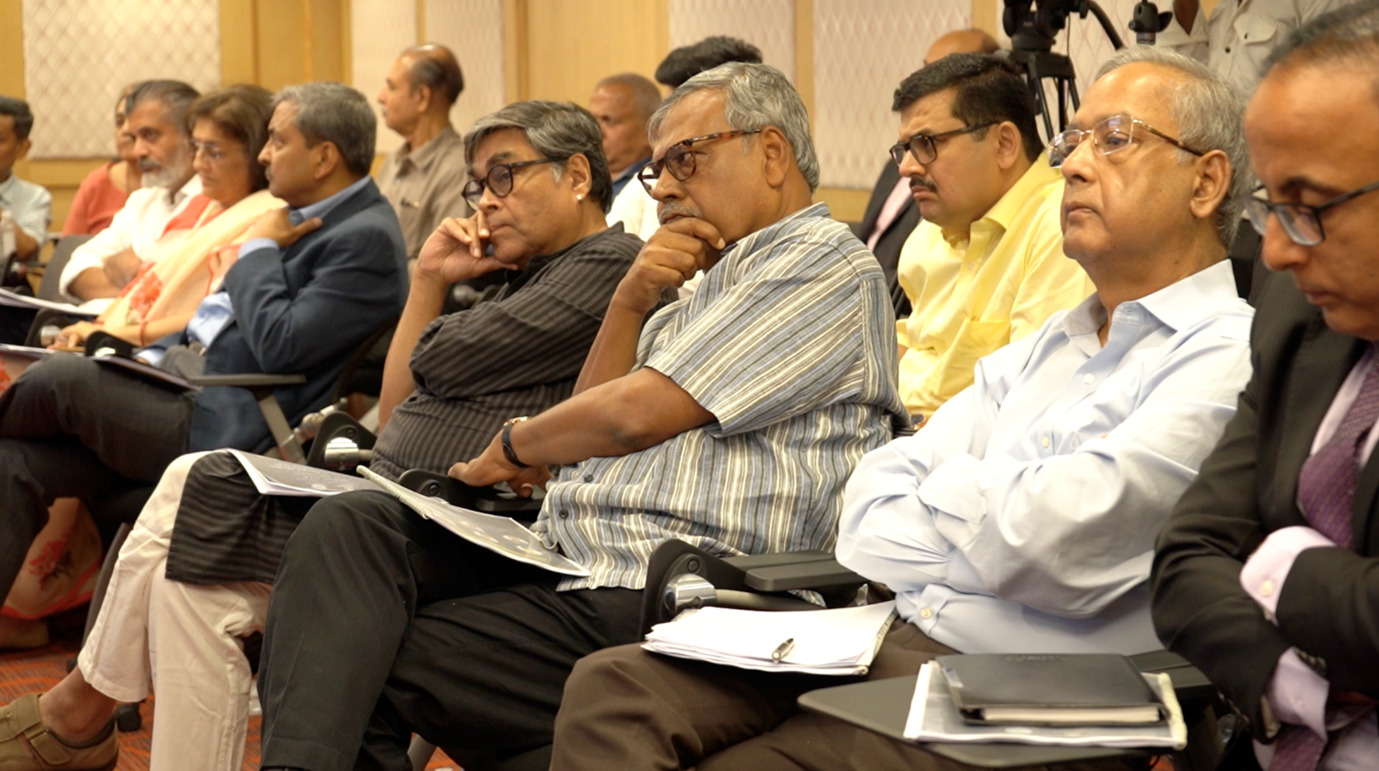
A view of the intent audience listening
to the discussions
___________________
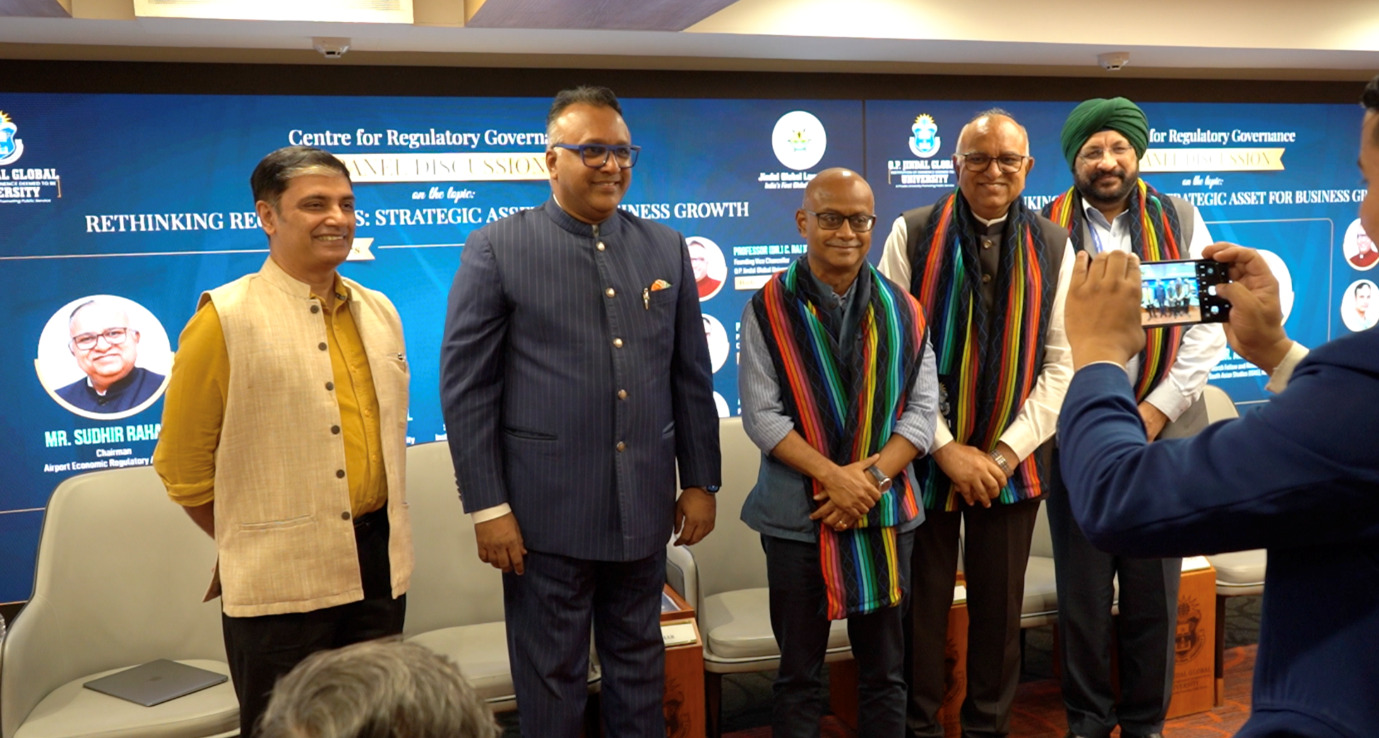
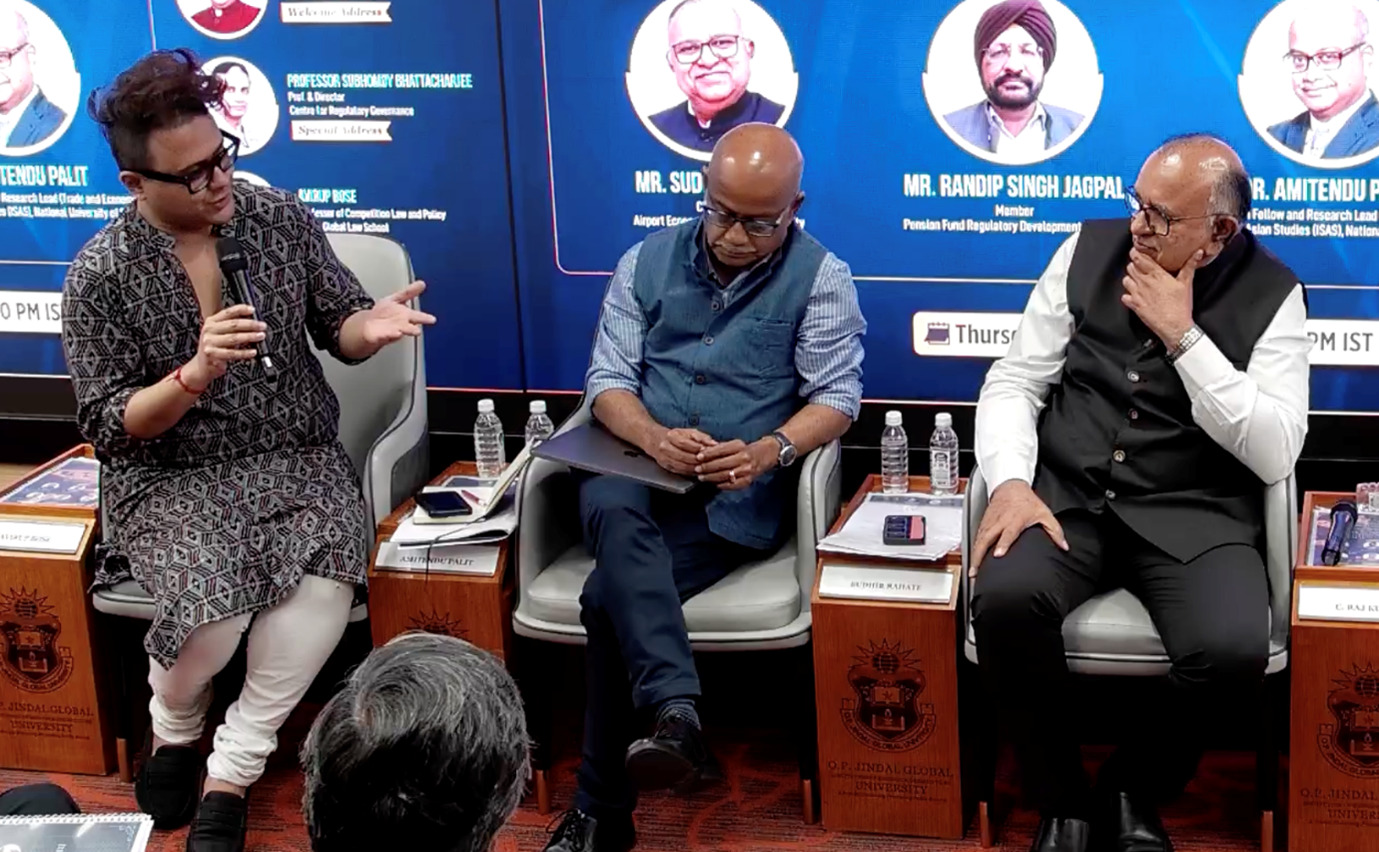
From Left to Right
1. Professor Subhomoy Bhattacharjee (Professor of Practice &
Director at CRG)
2. Prof (Dr) C Raj Kumar (Founding Vice Chancellor, Jindal
Global University)
3. Dr Amitendu Palit (Senior Research Fellow and Research Lead
(ISAS), National University of Singapore
4. Mr S.K.G. Rahate, IAS (Chairperson, Airports Economic
Regulatory Authority, GOI)
5. Mr Randip Singh Jagpal (Member, PFRDA)
___________________
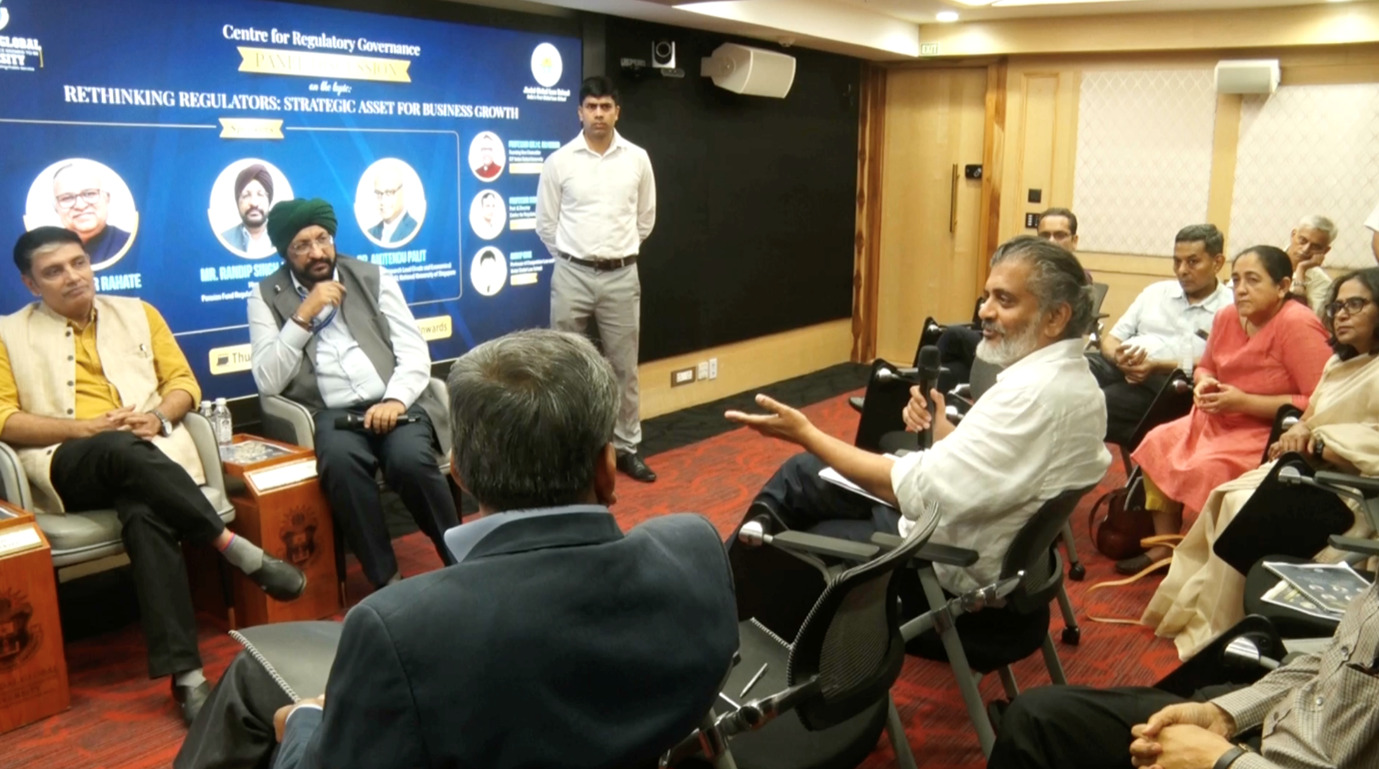
A view of the keen discussions during the
Seminar
___________________
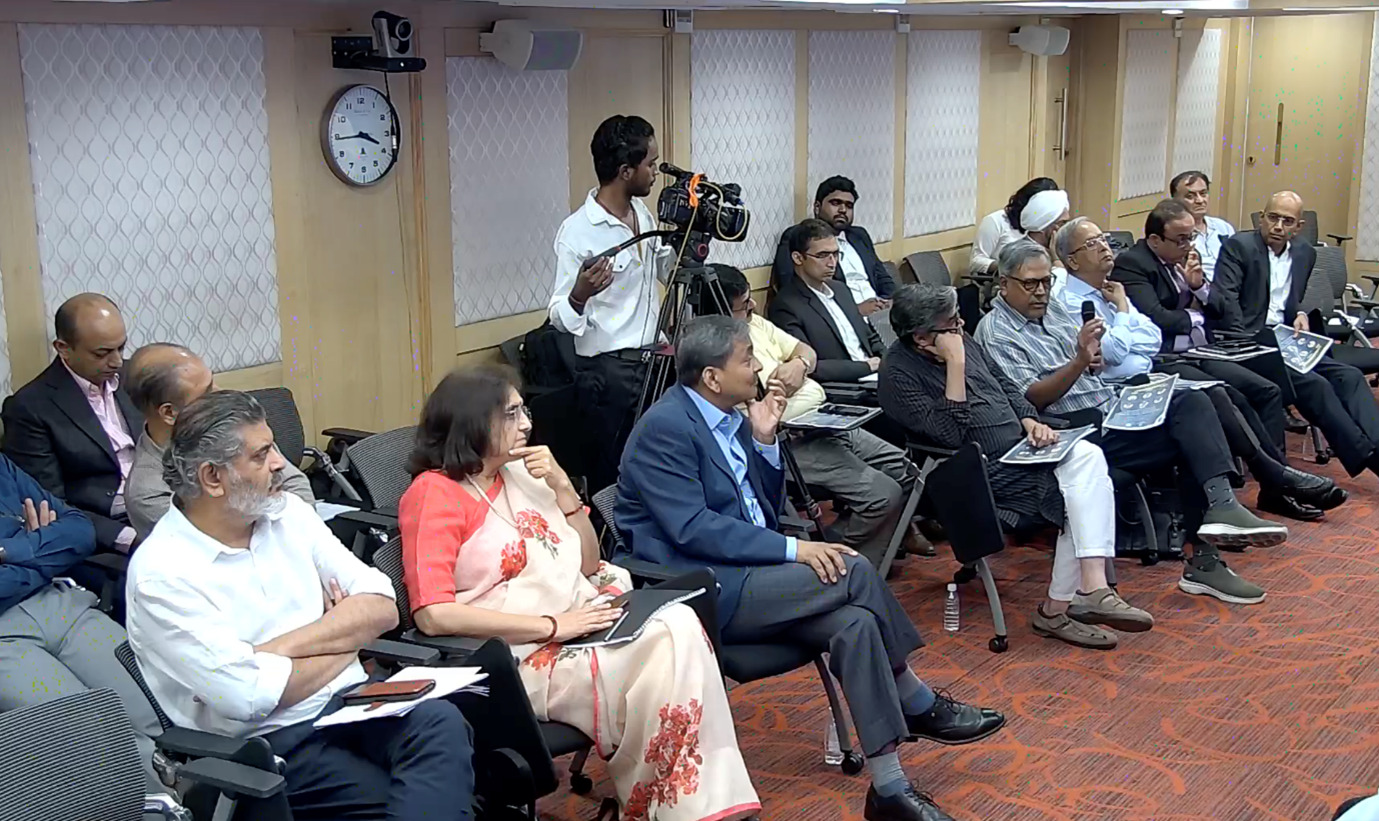
Snapshot
of the distinguished audience
___________________
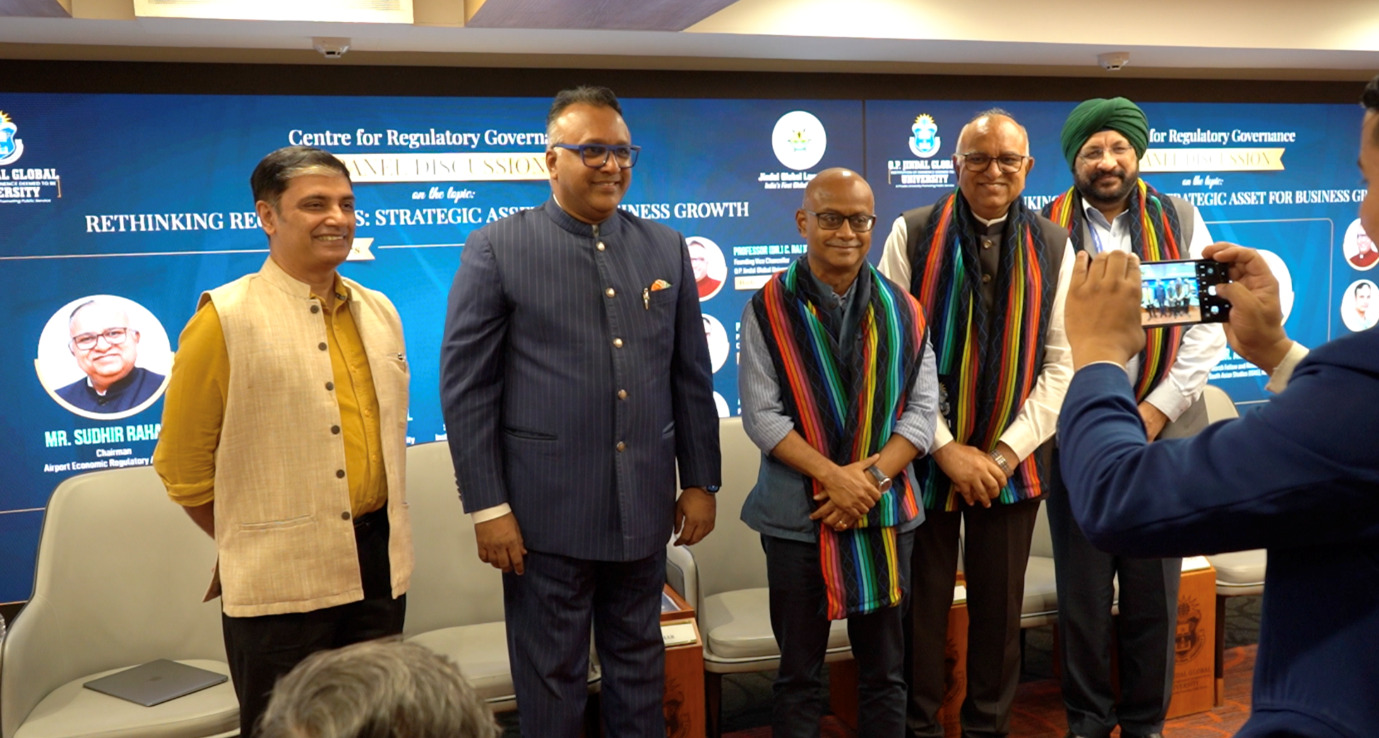
From Left to Right
1. Professor Avirup Bose (Associate Professor and Assistant
Director, Centre for International Trade and Economics Laws, Jindal Global Law
School).
2. Dr Amitendu Palit (Senior Research Fellow and Research Lead
(ISAS), National University of Singapore
3. Mr S.K.G. Rahate, IAS (Chairperson, Airports Economic
Regulatory Authority, GOI)
Note
on the session Rethinking Regulators: Strategic Asset for Business Growth
Experts from the government, from the regulators and from the
academia including those from the OP Jindal University held a deep dive session
on “Rethinking Regulators: Strategic Asset for Business Growth” on 12 June,
2025.
At the intense session, experts discussed how some of the
regulators have made the welcome transition from just checking boxes to enforce
compliance by individual entities to principle based regulations. This has
allowed the regulators to develop pricing decisions that suit the industry and
serve the customers. This has helped them move away from being held hostage to
managing the capital investment made by the business as the basis of pricing of
services that helps the sector grow and keep costs low for the customers.
As one of the speakers put it succinctly “When there is a natural monopoly
there is always this risk of dominance and misuse of the dominant position. So
the government has to have a regulator for those sectors.”
On the same theme, another expert pointed out that to make the
transition to the principle based regulation it is important to make a
judgement call about the quality of regulators. “This has not always proved to
be a very effective example in India's case”, was the opinion in this context.
Only if these conditions are met can the regulators be regarded as “strategic
assets”. The reverse question is if they are not strategic assets, then do they
become liabilities? It was also debated that globally there is a tendency to
shift away from regulators. “There's no denying this and one of the most
approximate and acceptable reasons for that is the cost of funding regulators”.
In this context the recent announcement made in the Union Budget
for a relook at the regulators presumably means moving towards a light touch approach.
But then “what exactly is a light touch approach or the feather touch approach
and how those should be balanced will be some very interesting issues to
develop”.
For instance, some regulators are examining the nature of
investments made by business in the states to figure out if the money is going
into the extraction of minerals or whether they are going for the development f
infrastructure. It is difficult to judge whether such analysis would be
classified as a light touch regulation or an invasive one. But when the
regulator sets charges those have to be reasonable which means a fair amount of
details from the sector operators have to be extracted to arrive at a fair
decision.
These raise the issue of funding for the regulator and questions
on whether the consumers gets to know how much of the charges she pays, is also
used to finance the regulators.
The closed door session was attended by over 50 guests and a
most distinguished panel of experts at the JGU International Academy at the Taj
Mansingh Hotel in New Delhi.
______________________
Reference Article - https://crg.jgu.edu.in/post/note-on-the-session-rethinking-regulators-strategic-asset-for-business-growth


Comments (0)